



Solar farms, wind turbines, battery stores and EV chargers all rely on something that seldom gets a mention: the wiring. One loose crimp or a cracked sheath can take a whole system offline, and the repair costs far more than building it properly the first time. That is why a well-made renewable energy wiring harness matters so much.
When our engineers at SINNHONG ELECTRONICS CO., LIMITED take on a project, they work with you from prototype to mass production, build to IPC/WHMA-A-620 standards and source genuine connectors from brands such as TE, Molex and Amphenol. The same care goes into our electric vehicle charging cable assembly range and our industrial grade electric vehicle wiring looms, so every product performs reliably wherever it is installed.
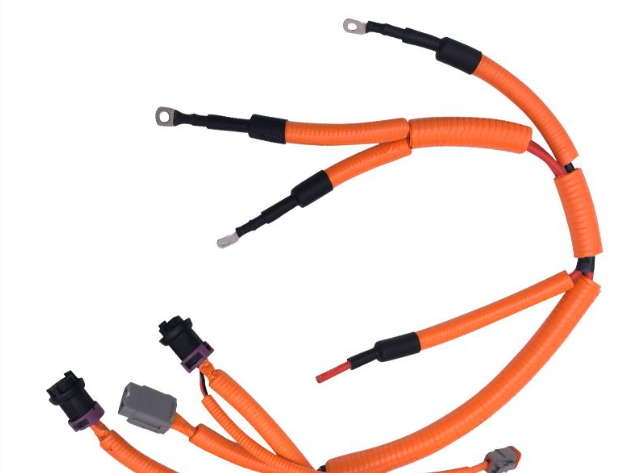
A renewable energy wiring harness is a pre-assembled bundle of wires, terminals, connectors and protective sleeving, made to carry power and signals through a clean energy system. Instead of running loose cables one by one on site, installers fit a single harness cut and routed to match the equipment layout. It saves time, and it removes a lot of guesswork.
Most harnesses include:
Copper conductors sized for the expected current
Insulation and outer sheathing rated for heat, UV light and moisture
Crimped terminals and connectors, sealed where water is a risk
Sleeving, conduit and clamps to guard against rubbing and strain
Clear labelling, so engineers can trace every circuit
You will find them in solar arrays and inverters, wind turbine nacelles and control cabinets, battery storage racks and mixed systems that combine all three.
Durability matters because these installations sit outdoors for decades. They face temperature swings, damp air and constant vibration. A poor joint runs hot, and a hot joint is a fire risk. Good electrical safety starts with the harness.
An electric vehicle charging cable assembly is the flexible lead that carries power from a charger to the vehicle. It is far more than a length of cable. It is a finished product, with connectors moulded on and every conductor tested.
The main parts are:
The vehicle-side plug, such as the Type 2 connector common in the UK
Power conductors and an earth conductor
Small signal wires for communication between charger and car
A tough outer jacket and strain relief at each end
The charger-side termination, either fixed or plug-in
Charging happens in many places: home wallboxes, workplace car parks, public rapid chargers and fleet depots. Each one puts different demands on the lead. Public cables get dragged, dropped and driven over, so they need a rugged jacket. Home units need something lighter and easier to handle.
The link to renewables is direct. Many chargers draw from solar or battery systems, so the harness behind the charger and the lead in the driver's hand form one connected path. Reliable power transmission and proper protection at both stages keep that path safe.
A wiring loom groups and protects the cables inside a vehicle or machine. Industrial grade electric vehicle wiring looms go a step further. They are built to survive heavier duty than a standard passenger car ever sees.
What makes them suitable for industrial use?
Heat: high-temperature insulation copes with warm battery packs and busy motor bays
Vibration: secure clamping and flexible cable stop fatigue and cracking
Moisture: sealed connectors and protective sleeves keep water and washdown spray out
Mechanical stress: abrasion-resistant coverings guard against sharp edges and repeated movement
You will find them in electric vehicles, charging equipment and industrial machinery such as forklifts, access platforms and automated guided vehicles. In each case, the loom keeps power and data flowing where a failure would stop work.
The two families look similar but face different problems. A renewable energy wiring harness usually stays fixed for years, while EV products often flex, move and vibrate. This table shows the main contrasts.
How to Choose the Right Wiring Solution
Start with the numbers, then work outwards.
Voltage and current: confirm the maximum values, including peaks. Undersized conductors overheat.
Cable and connector selection: match conductor size and insulation to the load. Use connectors rated for the same current, from makers you trust.
Environmental conditions: consider sun, salt air, dust and water. A rooftop and a warehouse need different materials.
Temperature and mechanical resistance: check both the hottest and coldest conditions, then think about bending, pulling and vibration.
Safety and compliance: ask about RoHS 2.0, IPC/WHMA-A-620 workmanship and any standards your market requires.
Customisation and installation: decide whether you need special lengths, labelling or pre-fitted connectors to speed up fitting.
Write these points into a simple specification before you ask for quotes. It makes comparisons fair and avoids surprises later.
Off-the-shelf cable rarely suits a specific machine or site. A custom assembly is made around your drawings, so it fits the first time. That means easier installation and fewer on-site cuts, splices and workarounds.
The benefits add up:
Better reliability: fewer joints, and every one crimped and tested in the factory
Less wiring complexity: one labelled harness replaces dozens of loose cables
Consistent quality: the hundredth unit matches the first
Specialised support: solutions shaped around renewable energy and EV demands
Our production runs through an ISO 9001-certified facility in Vietnam, backed by an engineering team that supports projects from prototype through to volume orders. We source genuine connectors from leading brands such as TE, Molex, JST, Amphenol and Hirose, and we can use original or equivalent parts to save time and cost. Our Dongguan site adds further capacity and design know-how.
Solar energy systems: panel string links, combiner boxes and inverter connections
Wind energy systems: turbine control wiring, sensor lines and ground-level cabinets
Battery energy storage: busbar links, monitoring leads and cabinet interconnects
EV charging stations: internal charger wiring and each electric vehicle charging cable assembly used on site
Electric vehicles: battery, motor and auxiliary circuits
Industrial EV equipment: looms for lifts, carts and automated vehicles
It is a ready-made bundle of cables, connectors and protection, designed to link the parts of a solar, wind or storage system safely and neatly.
It is the finished lead that carries power and control signals between a charger and a vehicle, complete with connectors, strain relief and testing.
They organise and protect cabling in electric vehicles, chargers and heavy-duty machines, where heat, vibration and moisture would damage ordinary wiring.
Check voltage, current, temperature range and exposure to water or movement. Then confirm the connectors, compliance needs and any special routing before ordering.
Yes. Lengths, conductor sizes, sleeving, connectors and labels can all be made to your drawings, which helps installation and long-term reliability.
Reliable wiring quietly decides whether a renewable energy or EV project performs as planned. A properly built harness, a well-tested charging lead and a tough industrial loom each protect your equipment, your budget and the people who work with it. Choosing suitable designs, made by a careful manufacturer, pays back through fewer faults and simpler installation.
SINNHONG ELECTRONICS CO., LIMITED offers custom harnesses, cable assemblies and Renewable Energy Wiring Harness, with engineering support from first sample to full production. Send us your drawings or requirements today at https://www.sinnhong.com/ and let us build a wiring solution that fits your project.
 sales@sinnhong.com
 Whatsapp: 8613543700314
 Send us message